
Performing Shakespeare
Oliver Bennett takes you through a method for preparing and performing a Shakespeare speech.

I have been trying to develop a method for performing Shakespeare. This is primarily for students and actors, but I hope it is of interest to a wider audience. I hope it shows that good acting, without being too intellectual, can be a kind of literary criticism.
I’m going to take a famous speech from Richard II. The somewhat weak King has been deposed by Bolingbroke, who will go on to become Henry IV, and is in prison.

This also happens to be one of the speeches that I performed in our Project 39. The video of the final performance (we did quite a few takes) is at the end of the essay, so you can decide for yourself if the method works.
Here’s the text of the speech:
RICHARD II: I have been studying how I may compare
This prison where I live unto the world:
And for because the world is populous
And here is not a creature but myself,
I cannot do it; yet I'll hammer it out.
My brain I'll prove the female to my soul,
My soul the father; and these two beget
A generation of still-breeding thoughts,
And these same thoughts people this little world,
In humours like the people of this world,
For no thought is contented. The better sort,
As thoughts of things divine, are intermix'd
With scruples and do set the word itself
Against the word:
As thus, 'Come, little ones,' and then again,
'It is as hard to come as for a camel
To thread the postern of a small needle's eye.'
Thoughts tending to ambition, they do plot
Unlikely wonders; how these vain weak nails
May tear a passage through the flinty ribs
Of this hard world, my ragged prison walls,
And, for they cannot, die in their own pride.
Thoughts tending to content flatter themselves
That they are not the first of fortune's slaves,
Nor shall not be the last; like silly beggars
Who sitting in the stocks refuge their shame,
That many have and others must sit there;
And in this thought they find a kind of ease,
Bearing their own misfortunes on the back
Of such as have before endured the like.
Thus play I in one person many people,
And none contented: sometimes am I king;
Then treasons make me wish myself a beggar,
And so I am: then crushing penury
Persuades me I was better when a king;
Then am I king'd again: and by and by
Think that I am unking'd by Bolingbroke,
And straight am nothing: but whate'er I be,
Nor I nor any man that but man is
With nothing shall be pleased, till he be eased
With being nothing.
The full speech is longer. Richard goes on to hear music playing near the prison and reflects on music, time and love. It contains one of my favourite lines: “I wasted time and now doth time waste me.” He is then attacked. He puts up a brave fight, killing two of his assailants, but then he is stabbed and dies. But this section is complete in itself and long enough to be getting on with.
THE METHOD.
I call the method S.T.I.R.S. Not that catchy, but bear with me. Most of these steps would be taught at a contemporary British drama school, but there are a few that I think are not sufficiently explored by modern teachers and actors.
S - situation
T - thought
I- image
R - rhythm
S - sound
SITUATION.
This is the beginning and the end point of all acting. What situation is the character in? The more I act myself or teach others, the more convinced I am that all acting methods are attempting to get you into the situation of the character. And when we, as audience members, don’t like the acting we are seeing, it is because we do not believe the actor is fully in the situation of the character. To take a recent popular example – did I really believe that Matt Damon as Odysseus was listening to the most seductive, enchanting, desperately yearning sounds ever and was struggling to break free of the mast to dive to certain death as his ship passed the Sirens? No. Therefore, I did not believe the actor was fully in the situation of the character.
In this speech, Richard II has lost everything. It is an unprecedented and extreme situation. As Richard I am a King, anointed by God, who has been deposed by a mere mortal. I am now in a completely empty prison cell with only my disturbed thoughts for company. And I may well be killed.
The logical result of a dramatic situation is an immediate need. All characters in Shakespeare have strong immediate needs all the time, that is why he is such a good playwright. David Mamet said that all characters in all well-written plays find themselves in a state of disorder and try to bring order. Humans simply cannot deal with losing everything. Richard II is no exception. As an actor I have to locate the need of the speech. I’m going to go for: I need to find some comfort in order not to plunge into despair.
THOUGHT.
Shakespeare’s characters have to think very hard and very fast to survive. Richard cannot deal with being alone and in prison. He is used to being a King in the world, sitting on a throne, surrounded by beautiful objects, servants, attendants. So initially he tries to compare his prison to the world. And this sends his thoughts spiralling, desperately searching for comfort.
I would summarise Richard II’s thoughts in this speech like this:
I have been trying to compare this prison to the world. I can’t. But I’ll do it anyway. I’ll imagine that my brain and my soul have mated and produced many children: my thoughts! But none of these thoughts are happy. My good thoughts are religious. But these are contradictory, because religious doctrine is contradictory. No comfort there. Other thoughts are ambitious - I could escape! But I can’t, so these thoughts are useless. Still other thoughts try to seek solace in the fact that people have suffered before as I am suffering now. Maybe there is comfort in that. So I am many people in one person. But none is happy. Sometimes I remember when I was King. But then I remember the betrayal done to me and I wish I was a beggar. And I am. But then I want to be King again and then I remember that I was deposed. So I’m nothing again. And no man, who is only a mere mortal, can be pleased with being nothing until he is dead.
I’ve made some interpretations there that could be debated. But for me that makes sense of the shape of Richard’s restless thinking. When Adrian Lester was playing Hamlet for the great director Peter Brook, they sat together for weeks before rehearsals working out Hamlet’s exact thoughts. Brook would occasionally stop him saying ‘no, that’s not quite the thought’. This is perhaps the most crucial stage in an actor’s preparation.
IMAGE.
Within these thoughts are images. As an actor, I need to see the images in my mind in high definition so that they will communicate to the audience. The rigorous physical and vocal training that actors do (or should do) is designed to make body and voice responsive to their imagination. The texture of the voice and movements of the body should be able to communicate what they are imagining.
As Shakespeare speeches go, this one is not that image-heavy. But there are some key pictures I need to visualise as clearly as possible. For the line “a generation of still-breeding thoughts”, I might imagine a pregnant body with unhappy thoughts pouring out. Maybe a painting will help me.
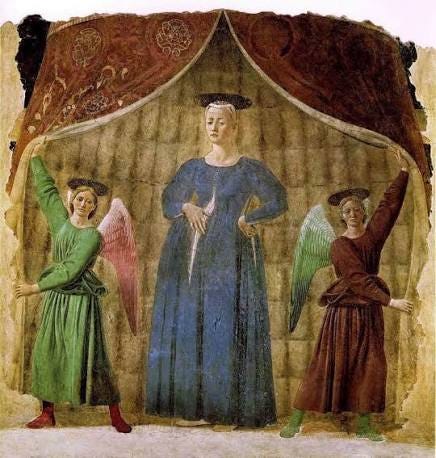
I might imagine this, but with baby-thoughts teeming out of the pregnant woman. Shakespeare’s images are often surreal, often biblical. For the lines:
how these vain weak nails
May tear a passage through the flinty ribs
Of this hard world, my ragged prison walls
I will spend a lot of time picturing this: my fingers trying to tear through the hard walls of the prison. I need to see the:
silly beggars
Who sitting in the stocks refuge their shame
What do the beggars look like? How long have they been in the stocks? Have they been pelted with fruit? Beaten up? Maybe something like this:
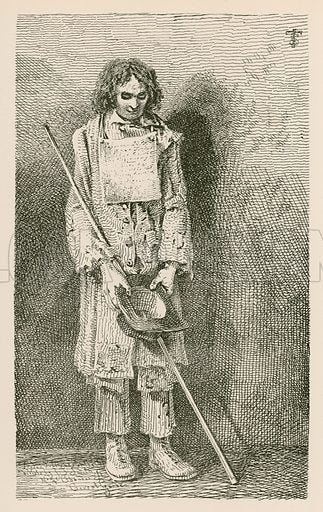
The specific picture I have in my mind is going to influence how I say the lines and, hopefully, communicate to the audience. I need to see myself as a King:
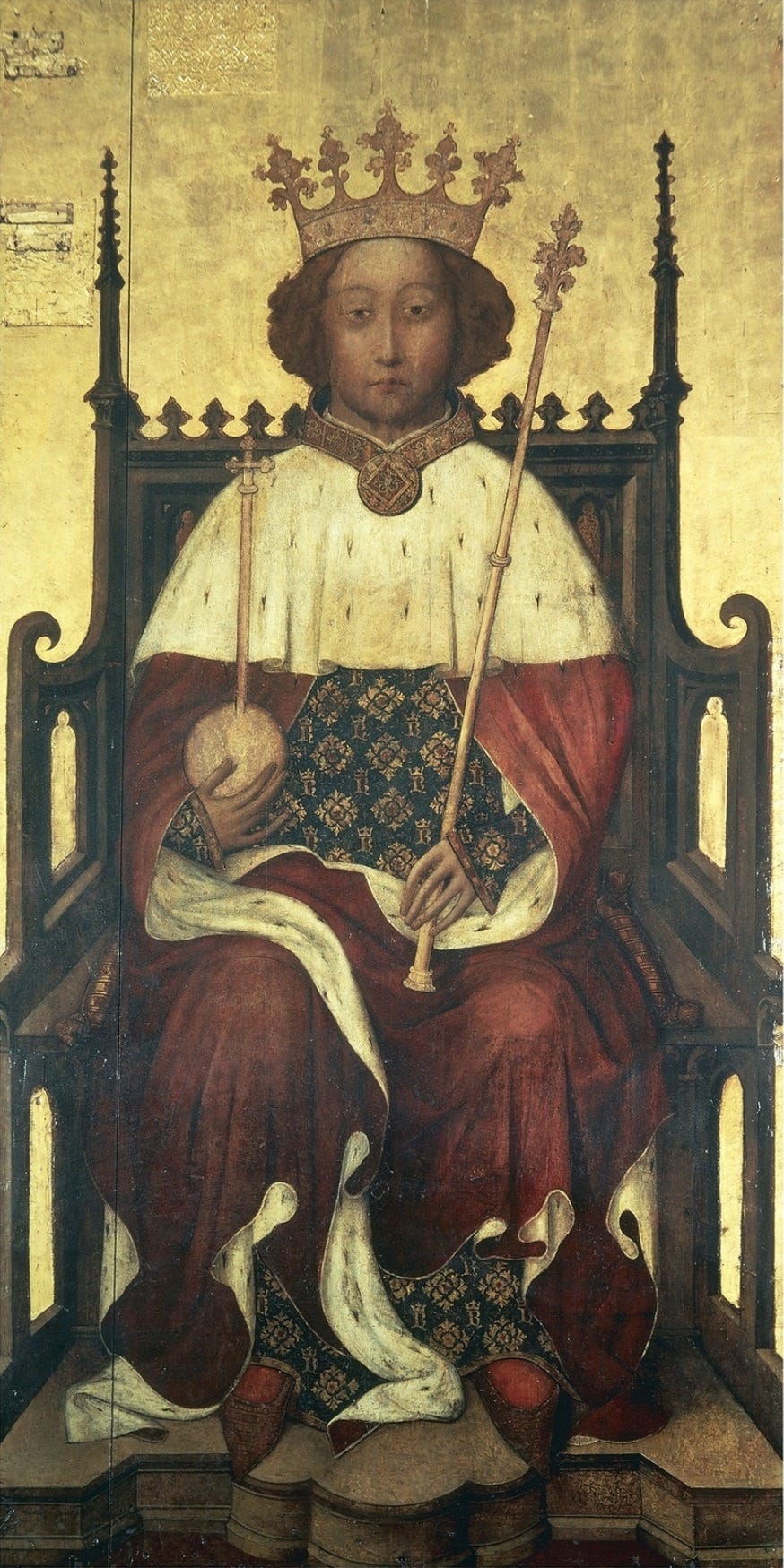
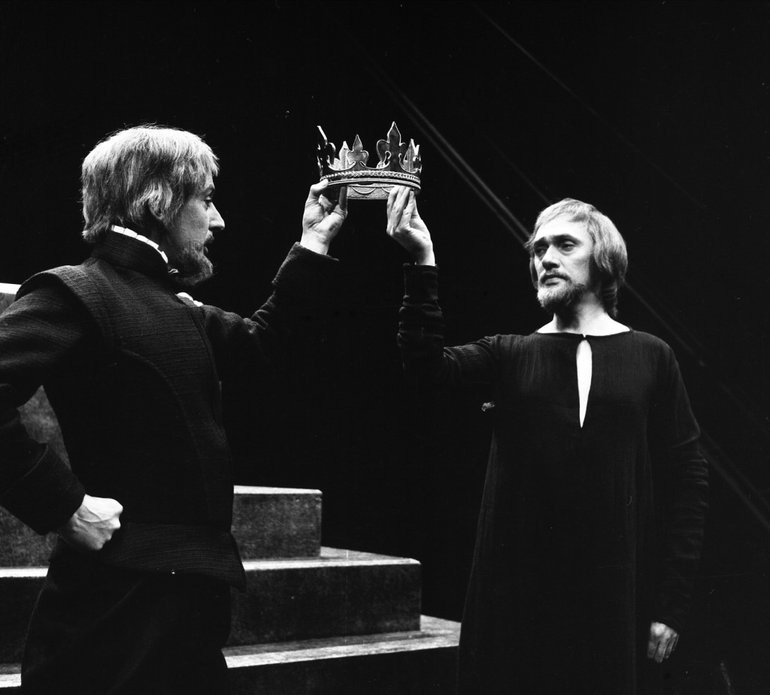
I need to remember being deposed by Bolingbroke. I need to picture Bolingbroke and in that picture is my whole attitude to him, the usurper, the betrayer.
RHYTHM.
Obviously, Shakespeare writes in iambic pentameter. Ten syllables to a line. These are divided into five ‘feet’. Each ‘foot’ is made up of an unstressed syllable followed by a stressed syllable. So, if ‘u’ means an unstressed syllable and ‘/’ means stressed, it goes like this:
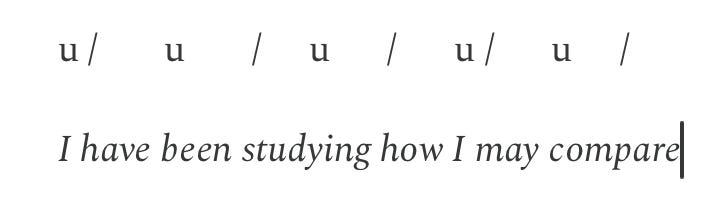
This is like the background beat - the drum beat, perhaps - of a song. The thoughts are like the melody over the top. In preparation, I will say the speech overemphasising these beats. This will sound artificial. But I don’t mind. I want to get the background rhythm into my muscle memory. It can give you clues about which words to emphasise. It would be a mistake to really stress the word ‘been’ in this opening line. It would go against the metre. You could do it as some kind of radical interpretation to suggest it is in the past, or something like that. But Shakespeare is subtly telling you he doesn’t want that. So don’t do it.
But, to make things complicated, sometimes the sense of the line can only be communicated if you go against the background beat. Take this line:
Unlikely wonders: how these vain weak nails.
In strict iambic pentameter, in the second half of the line I should stress ‘how’, ‘vain’ and ‘nails’. But I cannot make sense of ‘vain weak nails’ without stressing all the words equally. That’s how we naturally talk in English. Just say ‘small black box’ without thinking about it. I’ll bet you stressed each word equally. You did not stress only ‘small’ and ‘box’. Because the descriptors ‘small’ and ‘black’ are both significant, your brain automatically stresses them. So there are cases when the natural sense of the line will work against the background beat of the iambic pentameter. This is how poetry works. It is up to the performer to balance the sense and the rhythm. The push and pull between them, essentially, is poetry.
(N.B. In a couple of lines in middle of the speech the rhythm gets very strange, complex and disordered. The iambic goes all over the place. There could be a deliberate reason for this, but I don’t know, so I’ll skate over it here.)
SOUND.
Now we are getting into things that young actors are not taught enough at modern drama schools. The sound of Shakespeare. I do not believe modern actors pay enough attention to sound. There is a historic explanation. The previous generation of teachers were reacting to an English acting tradition where sound was all important and most theatre was just talking heads. The “Voice Beautiful”, it was called. John Gielgud is the best example.
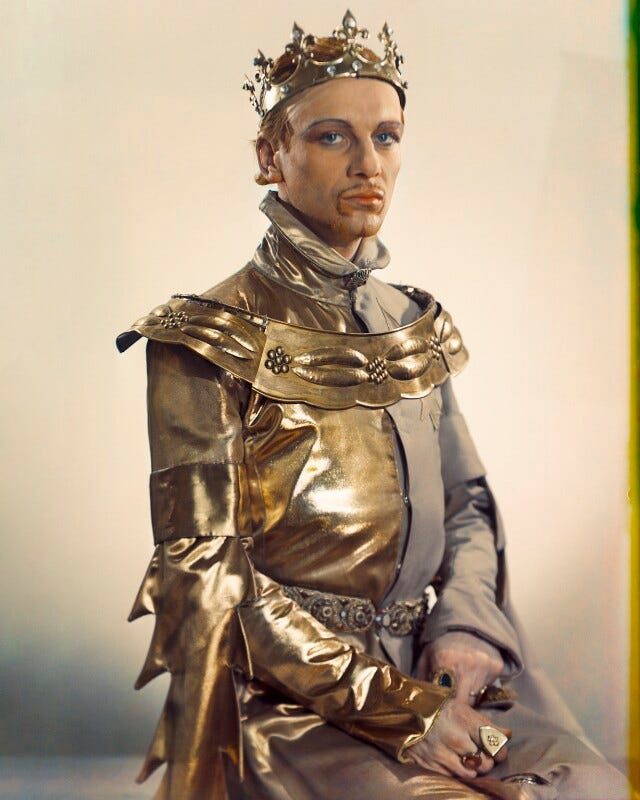
The exposure in the 80s, 90s, and 00s to European theatre brought a stronger visual and physical element into British culture. But I think we have now lost the importance of sound. And this is fatal for performing Shakespeare. It is very common now to see Shakespeare productions that are very visual and physical. But it would be unusually to see a contemporary production which experimented with the sound of the voice. I wish they would.
Shakespeare’s language is a highly organised pattern of sound. This came naturally to the Elizabethans, but you now have to train yourself to hear it. There are, of course, the obvious things we remember from school – alliteration and rhyme. But there are much subtler patterns going on, which an actor needs to hear and then honour. If they don’t honour this, the audience will lose much of the effect, even if they don’t realise it.
The best way to increase your receptivity to Shakespeare’s sound patterning is to say it out-loud very slowly, noticing repetitions or echoes of consonants and vowels. And notice when Shakespeare introduces new sounds into the mix. For example, the word ‘generation’ in this speech always pulls me up. It’s the first time that we’ve heard that ‘j’ sound. It’s a strong sound and is new for our ears. It is also the longest word in terms of syllable count that we have had so far. That tells you to pay attention. As an actor, I don’t have to know why Shakespeare is doing this. I just have to be aware that Shakespeare is introducing a new sound and bring that out for the audience.
The actor needs to balance repeated sounds. I need to place a sound that I know is going to be picked up later. In the word ‘divine’, this is the first instance of the ‘v’ sound. This is going to be picked up by Shakespeare a few lines later with ‘vain’. I want to have some awareness of this very subtle repetition. I don’t want my acting to be a lecture: I am not winking to the audience, or spelling the repetition out to them. But I should honour the sound patterning in the way a musician would.
I do want to bring out a very strong sound repetition at the end of the speech. The word ‘ease’ is extremely important. This is what Richard needs. He is desperate for some kind of ease, some kind of psychological resting place from suffering, some kind of order. Notice how Shakespeare gets very heavy with the repetition of the ‘ee’ vowel sound in ‘ease’ in the final few lines:
but whate’er I be,
Nor I nor any man that but man is
With nothing shall be pleased, till he be eased
With being nothing.
I’ve emphasised the words in which the vowel in ‘eased’ is repeated. There are a lot. Shakespeare is telling me, the actor, that he wants this sound repeated as he builds to the crescendo.
The word ‘nothing’ is obviously very significant too. It is repeated three times in the final few lines. For me the ‘u’ vowel in ‘nothing’ suggests despair. It is like a pang in the belly. This is what Richard is trying to avoid. Richard wants ‘ease’ to triumph over ‘nothing’. He wants ‘ee’ vowel to win over the ‘u’ vowel. So I want to bring out the interplay between these two that Shakespeare has given me. Notice, also, that he ends this part of the speech with ‘ee’ followed by ‘u’ in ‘being nothing’, just like he started the speech with ‘ee’ and ‘u’ in ‘been studying’. Perhaps the Elizabethan ear would have been sophisticated enough to register this echo. But maybe I am reading too much into it.
There are lots of other things I will do in preparation. I normally say the speech to myself while moving around in a kind of weird contemporary dance. I’m trying to find movements in my body that correspond to the sound of the text. I will do this over and over. It also helps get the speech fully inside me. And then I will stand still and relaxed and the movements my body remembers will be channelled into my voice and communicate a sense of movement to the audience.
I could do an improvisation before the speech and then launch into it. I could work with another actor and improv some backstory. I could memorise only the final words of each line – these often give a direct line to the subconscious of Richard, as a good poet will instinctively put the most important word at the end of a line for emphasis. I will write out the whole speech on a blank piece of paper, very slowly, word by word, so that I have the feeling that it is truly mine. So it starts to feel like I am choosing the next word myself. ‘And for because the world is…’ what is the world? What word shall I choose? Ah, I know, ‘populous’. I am trying anything and everything I can to get deeper into the language, understand the choices Shakespeare has made, and understand what clues he is giving me about how Richard’s mind is working, so I can fully enter into Richard’s consciousness.
And then, back to… SITUATION.
All this gets very heady and technical. Now I need to FORGET IT ALL. Everything must go! I have to trust that all this work has left its residue in my muscle memory and imagination. I really do need to forget it all otherwise my performance will be self-conscious and stumbling. Acting is like jumping off a diving board: if you are thinking too much, you will mess it up and fall on your face. So I go back to the situation. And I think only of the situation. I am Richard II. I used to be the King. Now I am alone and in prison. I have lost everything and I might find out I can lose even more in death. I simply cannot deal with this situation. How can I possibly deal with this situation? Well…
I have been studying how I may compare…
Great analysis of craft
This is so interesting. You havr commented that many modern acting students don't spend enough time thinking about the sounds when playing Shakespeare and it is certainly something I have noticed in some productions in which actors muffle their words or speak so rapidly that important words are lost. Perhaps this is because a lot of the work they do is aimed at training to work in Television or films?